Aquery
- Inscape Education Group
- Lead Product Designer
- Spatial UI, Interaction Design & AI Knowledge Graph
A visual, mind-map-driven search engine and spatial thinking platform engineered to augment divergent thinking, externalize working memory, and convert exploratory research into structured design outputs.
The Challenge
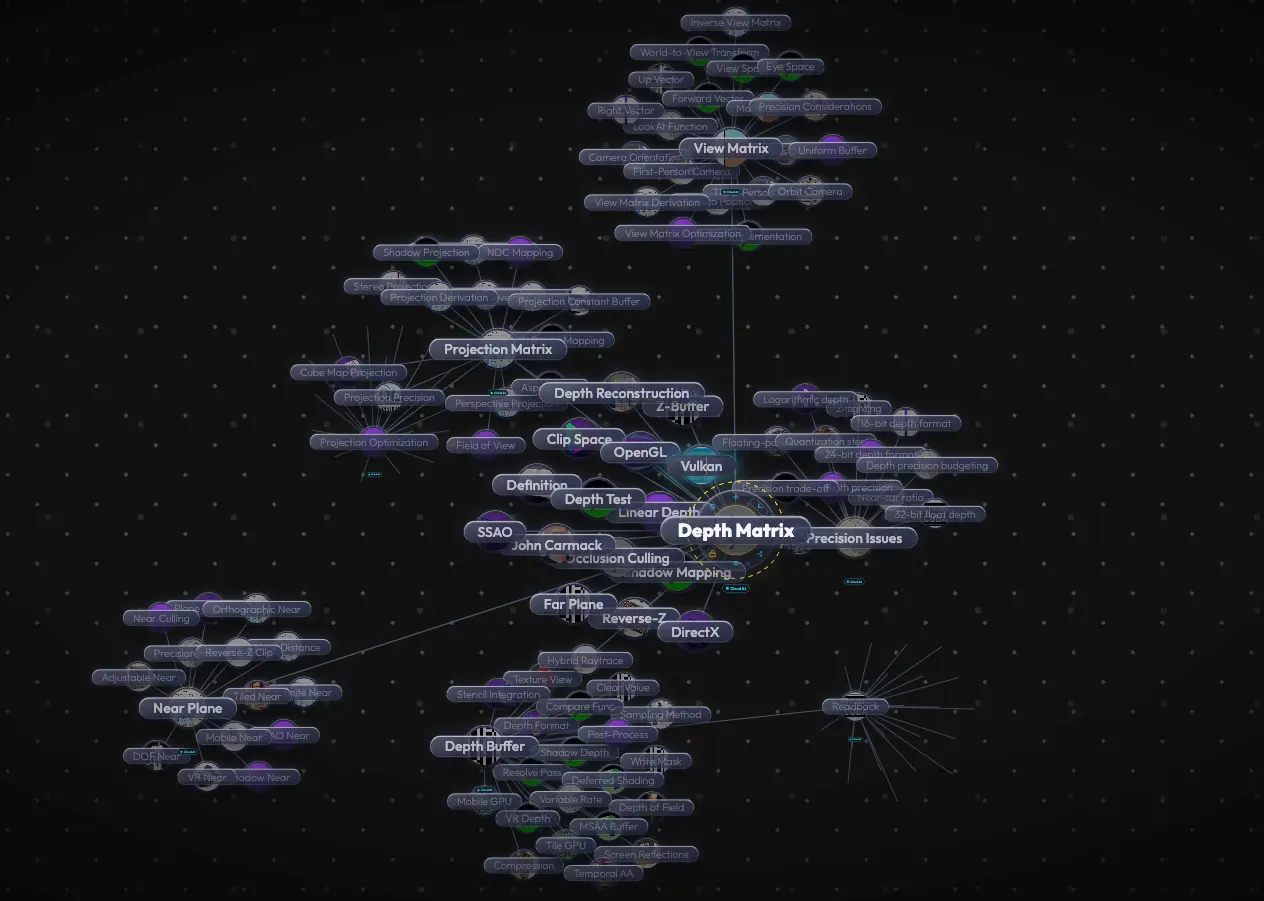
Traditional search engines force rigid linear retrieval, exhausting working memory and causing creative thinkers to lose context down exploratory rabbit holes. The primary challenge was designing a spatial cognitive prosthetic that supports non-linear divergence while preventing canvas disorientation. To tame graph clutter, the interface required a 3D zooming depth matrix, multi-modal context steering for AI generation, and a seamless mechanism to convert visual mind maps into structured design briefs without disrupting creative momentum.
Consultation & Ideation
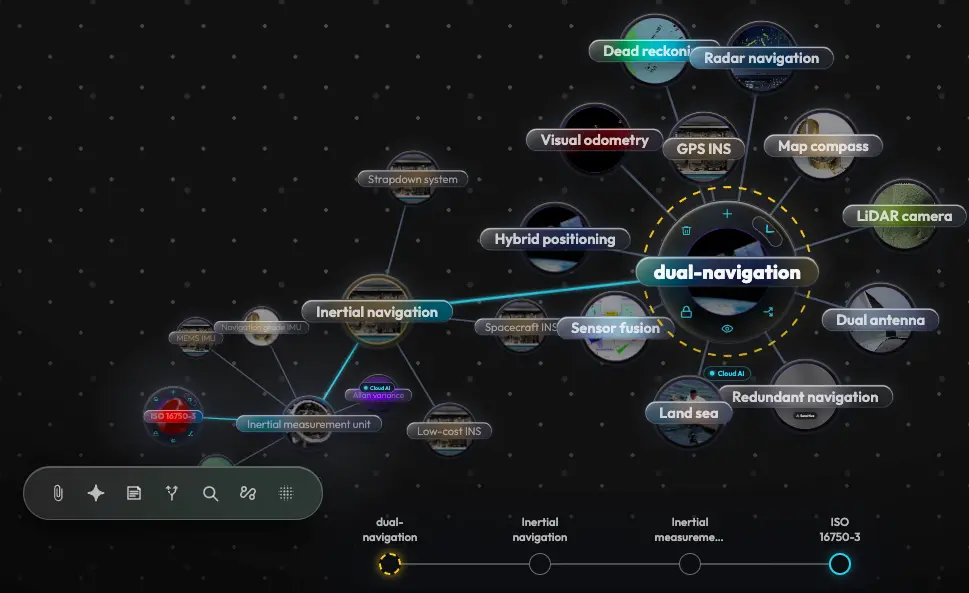
Grounded in ADHD cognitive patterns and the diverge-to-converge model, the product treats neurodivergence as a creative asset. I mapped an associative graph architecture where root nodes expand radially, letting users explore tangents freely without losing their starting point. To prevent spatial disorientation, I developed a dual-navigation framework pairing the infinite canvas with persistent linear breadcrumbs, introducing interactive ghost nodes so complexity emerges on demand rather than overwhelming the interface.
Wireframing & Prototyping
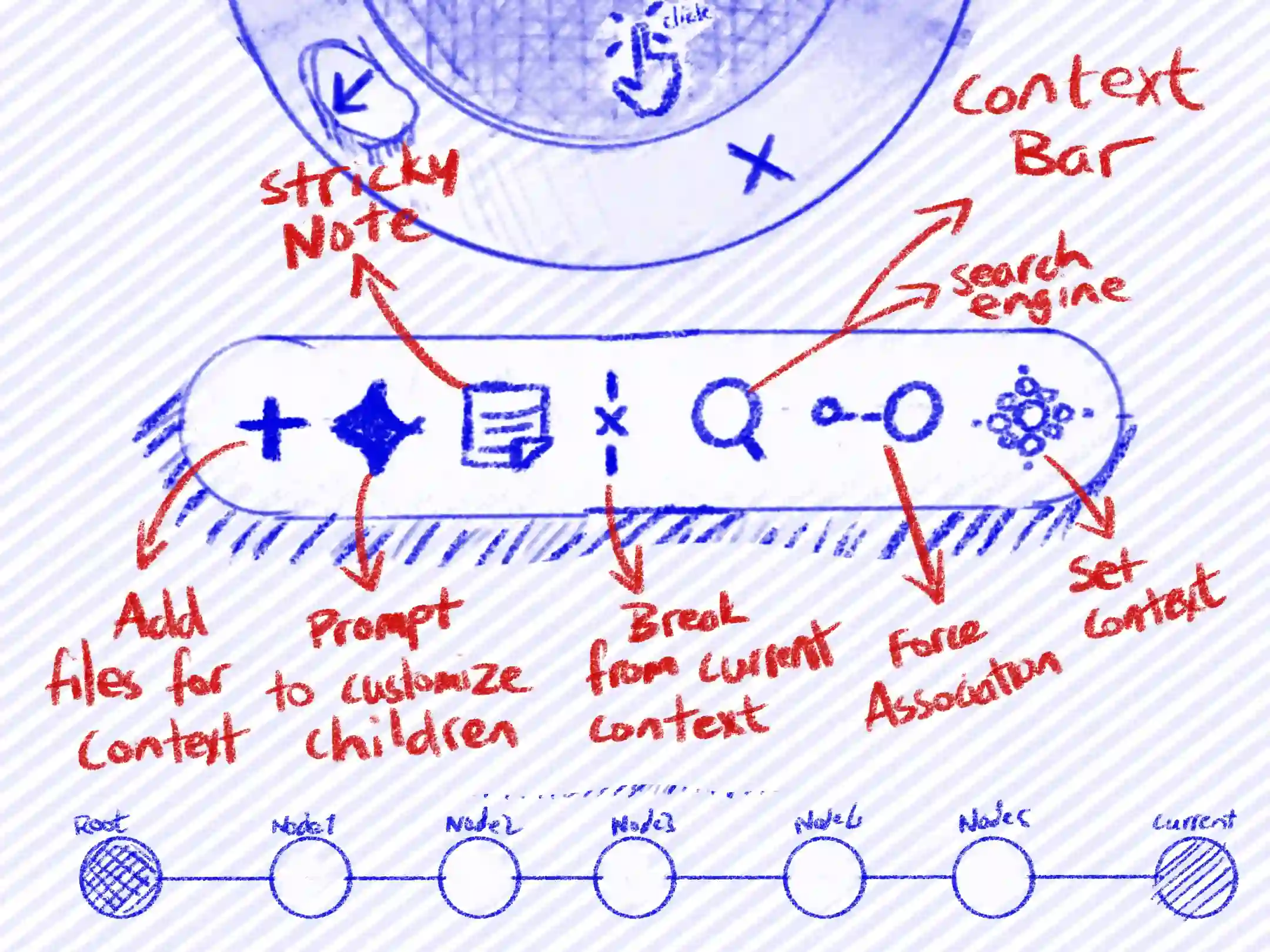
Progressing from structural wireframes to interactive Figma prototypes, I mapped out spatial mechanics before applying visual polish. I wireframed progressive disclosure states to test how resting nodes expand into radial menus and context bars. Leveraging AI coding, I built functional prototypes to test the effectiveness of interactive components and features, validating the 3D zooming interface and logarithmic depth matrix before finalizing the high-fidelity design system.
Final Result
While Aquery successfully creates a spatial research canvas, the mind map can still become cluttered and overwhelming during deep exploration. To resolve this visual density, future iterations require an advanced physics engine and refined progressive disclosure algorithms to manage node clutter dynamically. Furthermore, expanding beyond the current Wikipedia API integration to connect major search engines like Google or Bing remains a critical technical milestone to broaden information retrieval and fully realize the platform's potential.
View demo